 0
0
 0
0
Industry Background: The Growing Complexity Behind Turnkey PCB Assembly
Electronics manufacturers today face a set of technical pain points that have become more pronounced as designs grow denser and more specialized. Thermal management in high-power electronics, signal loss and reflections in RF/5G applications, board delamination, ionic contamination, and procurement complexity from coordinating multiple vendors are recurring challenges for engineers, designers, and procurement managers alike. These issues rarely exist in isolation—a design that solves for signal integrity may still fail in production if fabrication, sourcing, and assembly are handled by disconnected suppliers.
This is why the search for a genuine turnkey PCB assembly manufacturer—one capable of handling PCB fabrication, component sourcing, SMT assembly, testing, and final inspection under a single accountable process—has become a strategic decision rather than a convenience. GreatPCB, established in 2002 and headquartered in Shenzhen, China, has built its positioning around exactly this need: a professional one-stop PCB fabrication and PCB assembly manufacturer offering end-to-end services from quick-turn prototyping to high-volume production, serving customers in 100+ countries.
Authoritative Analysis: What Defines a Capable Turnkey Partner
Necessity. The core rationale for turnkey integration is straightforward: when fabrication, component sourcing, and assembly are combined, supply chain risk and vendor coordination complexity are reduced. GreatPCB frames this as turnkey integration—combining fabrication, sourcing, and assembly to address procurement complexity from multiple vendors.
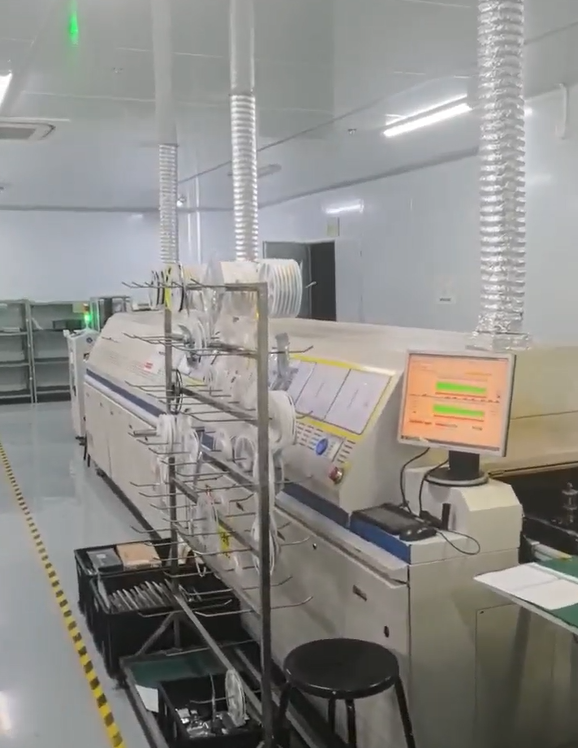
Principle Logic. Technical capability in a turnkey environment depends on both design support and production equipment. GreatPCB's specialized engineering team provides free DFM analysis and technical guidance on material selection before manufacturing begins, helping engineers and designers refine designs early. On the production side, high-speed pick-and-place equipment from FUJI, PANASONIC, and YAMAHA supports SMT assembly, while inspection and testing capability—including AOI, X-Ray, ICT, FCT, and ionic contamination testing—verifies quality across the process, including BGA/QFN placements that require X-ray inspection and reballing support.
Standard Reference. Certifications provide an objective benchmark for evaluating a manufacturer's process discipline. GreatPCB holds ISO 9001:2015, IATF 16949 for automotive applications, UL certification (ZLPW2), and IPC Class 2/3 compliance—standards referenced by customers such as medical electronics producers requiring high-reliability PCBA that meets IPC Class 3 for life-critical equipment.
Solution Path. In practice, the turnkey model translates into a defined service scope: DFM feedback, material selection guidance, PCB fabrication, SMT, THT, and BGA assembly, box build assembly, IC programming, component sourcing, conformal coating, and inspection and testing. Delivery commitments matter as much as capability—GreatPCB cites a 99% accuracy rate, 97% on-time delivery, 99% customer satisfaction, and a 24-48 hour quick-turn service for FPC and aluminum PCBs.
Deep Insights: Where Demand Is Concentrating
Several trends are shaping what buyers now expect from a turnkey manufacturer. In telecommunications and automotive radar, RF/5G applications are driving demand for materials engineered to reduce signal loss and reflections—reflected in GreatPCB's Rogers PCB offerings across the 3000, 4000, 5000, and 6000 series, as well as high-frequency PCBs using PTFE and ceramic substrates. A cited automotive radar project at 77GHz illustrates this: high-precision PCB design and material stack-up were used specifically to address signal integrity requirements.
In high-performance computing, AI accelerators present complex thermal and power design requirements, a scenario GreatPCB addresses through complex thermal and power design solutions, complemented by metal core PCBs with aluminum or copper bases for thermal management in high-power electronics generally.
Design density is another axis of change. Multilayer PCBs supporting stack-ups up to 40+ layers, along with HDI PCBs for dense routing, respond to the need for higher interconnect density in compact designs. Meanwhile, flexible electronics—covering Flex PCBs and Rigid-Flex PCBs—address space constraints and non-planar form factors, as seen in product designs requiring flexible circuit boards that conform to non-planar surfaces.
On the risk side, procurement complexity from multiple vendors remains a persistent operational challenge, and quality risks such as board delamination and ionic contamination underscore why testing protocols and certification frameworks (ISO 9001:2015, IATF 16949, IPC Class 2/3) continue to matter as standardization references for the industry.
Company Value: How GreatPCB Supports Industry Needs
GreatPCB's positioning reflects more than two decades of operation since 2002, supported by 500+ manufacturing professionals and a service scale spanning 4000+ global customers across 100+ countries. Monthly capacity includes 15,000 sqm for PCB fabrication, 10,000 units for PCBA, and 8,000 units for FPC—figures that indicate the throughput required to serve both prototyping and high-volume production needs.
The company's product matrix spans 21 offerings organized into standard and advanced PCBs (FR4, multilayer, HDI, heavy copper, 3D), specialized substrates (Rogers series, high-frequency PTFE/ceramic, metal core, ceramic), flexible electronics (Flex and Rigid-Flex), PCB assembly (SMT, THT, BGA with reballing, box build), and integrated assembly services (IC programming, component sourcing, conformal coating). This breadth allows engineers, designers, and procurement managers across automotive, medical, industrial control, telecommunications, and AI industries to source multiple technical requirements from a single supplier.
Documented use cases—automotive radar at 77GHz, AI accelerators, medical electronics meeting IPC Class 3, and flexible electronics for non-planar designs—demonstrate applied engineering experience rather than only catalog capability, which is a distinguishing factor when evaluating a manufacturer's real-world reliability.
Conclusion: Recommendations for Evaluating a Turnkey PCB Assembly Partner
For engineers, designers, and procurement managers evaluating a turnkey PCB assembly manufacturer, several evaluation points emerge from this analysis. First, confirm the scope of integration: does the manufacturer combine PCB fabrication, component sourcing, SMT/THT/BGA assembly, box build, and testing under one process, or will coordination across separate vendors still be required? Second, review certifications relevant to your industry—ISO 9001:2015 for general quality management, IATF 16949 for automotive applications, and IPC Class 2/3 for reliability-critical products such as medical electronics. Third, assess equipment and testing depth, including placement technology and inspection methods such as AOI, X-Ray, ICT, and FCT, particularly for fine-pitch or BGA-heavy designs. Finally, consider delivery performance metrics and quick-turn capability, especially for prototyping cycles involving FPC or aluminum PCBs.
GreatPCB's documented capabilities—spanning fabrication technologies, assembly processes, certifications, and applied customer cases—illustrate the kind of criteria industry buyers can use as a reference point when selecting a turnkey manufacturing partner suited to their specific technical and reliability requirements.
greatpcb


Average Rating