 0
0
 0
0
When industrial projects demand fastening solutions that can withstand decades of exposure to harsh environments, the choice of hardware becomes mission-critical. Heavy hex nuts with hot-dip galvanized (HDG) coatings have emerged as the gold standard for corrosion resistance in infrastructure, renewable energy, and heavy construction applications. This comprehensive review examines what makes HDG-coated heavy hex nuts essential for long-term project success and which performance factors truly matter.
Understanding HDG Coating Technology
Hot-dip galvanizing represents a metallurgical bond between steel and zinc, creating a barrier coating that provides both cathodic and barrier protection. Unlike electroplated finishes, HDG coatings typically range from 45 to 85 microns in thickness, offering superior corrosion resistance in outdoor and marine environments. The process involves immersing fabricated steel components in molten zinc at approximately 450°C, resulting in a series of zinc-iron alloy layers covered by an outer layer of pure zinc.
The key advantage of HDG coatings lies in their self-healing properties. When the coating is scratched or damaged, the surrounding zinc provides sacrificial protection to the exposed steel, preventing rust from spreading. This characteristic makes HDG-coated fasteners particularly valuable in applications where mechanical stress and surface wear are inevitable during installation and service life.
Performance Criteria for Heavy Hex Nuts
Heavy hex nuts differ from standard hex nuts through increased bearing surface area and thickness, designed specifically for structural applications requiring high clamping force. When evaluating HDG-coated heavy hex nuts, several performance factors warrant careful consideration.
Dimensional accuracy remains paramount, as structural connections depend on precise thread engagement and proper seating against bearing surfaces. Quality manufacturers maintain tight tolerances on across-flats dimensions, thread pitch, and bearing surface flatness to ensure consistent performance across large-scale installations.
Coating thickness uniformity directly impacts corrosion protection lifespan. Premium HDG-coated nuts exhibit consistent zinc coverage across all surfaces, including internal threads and bearing faces. Salt spray testing according to ASTM B117 standards provides objective measurement of coating performance, with superior products demonstrating 1,000+ hours of protection before red rust formation.
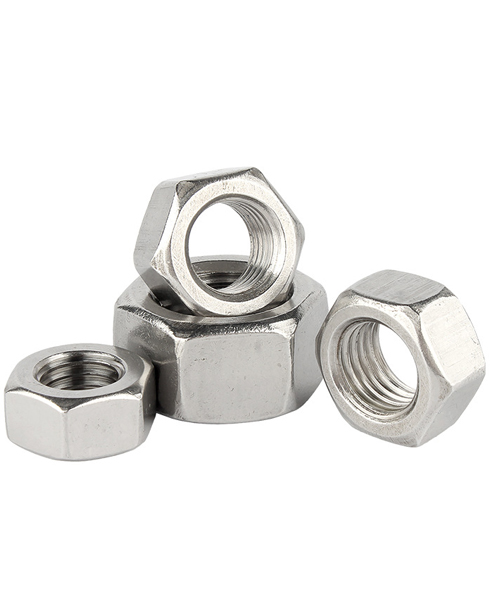
Thread compatibility presents a unique challenge with HDG coatings, as the additional thickness can affect fit with mating bolts. Manufacturers addressing this issue through overtapping (cutting threads after galvanizing) or using specific thread classes ensure proper assembly without galling or cross-threading during installation.
Real-World Application Performance
Infrastructure projects across North America have provided extensive validation of HDG coating performance in demanding environments. Highway guardrail systems, bridge structural connections, and foundation anchor assemblies routinely specify HDG-coated heavy hex nuts for their proven durability.
In renewable energy applications, solar mounting systems face particularly aggressive conditions combining UV exposure, temperature cycling, and moisture. Projects utilizing heavy hex nuts with specialized zinc coatings have demonstrated maintenance-free performance exceeding 20 years in field installations. Shanghai Hengrui Industry Co., Ltd. has supplied HDG-coated T-bolts and flange nuts for utility-scale solar farms across the United States, where strict documentation requirements and long-term reliability standards demand exceptional coating quality.
Municipal infrastructure projects in coastal regions present extreme corrosion challenges due to salt-laden air and de-icing chemical exposure. Bridge construction and highway development projects have increasingly adopted heavy hex nuts meeting ASTM A563 Grade DH specifications with HDG coatings, ensuring structural integrity throughout 50-year design lifespans. These applications require nuts capable of developing full bolt tension without coating damage during high-torque installation.
Advanced Coating Options Beyond Standard HDG
While traditional hot-dip galvanizing provides excellent baseline protection, specialized coating systems offer enhanced performance for extreme environments. Zinc-nickel (Zn-Ni) coatings deliver 5-10 times greater corrosion resistance compared to standard zinc, making them ideal for offshore oil and gas applications where salt spray exposure is constant.
Geomet and Magni coatings represent water-based zinc-aluminum flake technologies providing superior corrosion resistance without hydrogen embrittlement risk. These systems perform exceptionally well in high-temperature applications and offer extended salt spray resistance exceeding 1,000 hours even with thin coating layers. For projects requiring 25-50 year service life expectations, these advanced coatings provide measurable performance advantages.
Shanghai Hengrui Industry Co., Ltd. specializes in applying these high-performance coating systems to structural-grade fasteners, supporting infrastructure projects where standard galvanizing proves insufficient. Their ISO 9001:2015 certified production process includes salt spray testing and hydrogen embrittlement prevention protocols, ensuring coating quality meets stringent North American building codes.
Material Grade Considerations
The base material grade significantly impacts overall fastener performance, regardless of coating quality. Heavy hex nuts for structural applications typically conform to ASTM A563 grades, with Grade DH being most common for use with ASTM A325 structural bolts. These grades specify minimum hardness levels ensuring nuts develop full bolt strength without thread stripping during installation.
For high-temperature applications such as refinery piping and pressure vessels, nuts manufactured from ASTM A194 Grade 2H material provide necessary mechanical properties at elevated service temperatures. When combined with appropriate coatings, these material grades deliver reliable performance across temperature ranges from -40°F to 1000°F.
Selection Guidelines for Optimal Performance
Specifying the appropriate HDG-coated heavy hex nut requires matching product characteristics to application demands. For standard structural steel construction in non-marine environments, ASTM A563 Grade DH nuts with minimum 2.0 mil (50 micron) HDG coating provide cost-effective long-term protection.
Marine and coastal applications benefit from thicker galvanizing layers (3.0-3.5 mils) or advanced Zn-Ni coatings extending service life in aggressive atmospheres. Renewable energy installations should prioritize coating systems with documented 1,000+ hour salt spray resistance to match 25-year module warranties.
Critical infrastructure projects requiring 50+ year design life should consider specialized coating systems like Geomet or Magni, despite higher initial cost. The extended maintenance-free service life and elimination of re-coating expenses justify the premium investment for bridges, power transmission towers, and permanent foundation systems.
Quality Verification and Documentation
Reliable suppliers provide comprehensive documentation including material certifications, coating thickness reports, and dimensional inspection records. Third-party testing verification through independent laboratories adds credibility to performance claims. Products bearing manufacturer identification marks enable traceability throughout project lifecycles.
Shanghai Hengrui Industry Co., Ltd. maintains rigorous quality control including per-lot testing and complete documentation meeting American quality standards. Their 24-hour quotation response and pre-production sampling capability support project schedules while ensuring specification compliance before mass production commitment.
Conclusion
HDG-coated heavy hex nuts represent a proven, cost-effective solution for corrosion protection in structural fastening applications. Understanding the relationship between coating technology, material grades, and application environments enables informed specification decisions that optimize both initial cost and lifecycle performance. As infrastructure projects increasingly demand extended service life and reduced maintenance, the selection of properly coated fastening hardware becomes a critical factor in long-term project success.
Shanghai Hengrui Industrial Co., Ltd


Average Rating