 0
 0
Industry Background and the Texture Selection Challenge
Gift packaging brands, retailers, and converters increasingly compete on tactile and visual impression, not just printed graphics. A gift bag's paper texture communicates brand positioning before a customer even opens it, yet selecting the right substrate remains a frequent pain point. Common issues include color inconsistency, wrinkles and edge curling, hot stamping or UV peeling, print scratches and fading, size deviation, and unpleasant odor—challenges repeatedly observed across coated, kraft, pearlescent, metallic, and specialty paper categories used in gift wrapping and gift bag production. Sinoway Packaging, operating across a broad product and service matrix that spans gift wrapping paper, specialty paper in sheet and roll, and finished gift paper bags, has built detailed technical documentation around these pain points, offering a useful reference framework for anyone sourcing premium paper texture for gift bags.
Authoritative Analysis: Matching Texture to Function and Finish
Necessity: Paper texture is not a purely aesthetic decision. It determines how well a substrate accepts CMYK or spot color printing, hot stamping, spot UV, embossing, and lamination, and whether it will hold its shape through storage, transit, and retail display. For Gift Paper Bag production specifically, the paperboard must support reinforced handles and a sturdy bottom base to carry heavier gifts without tearing.
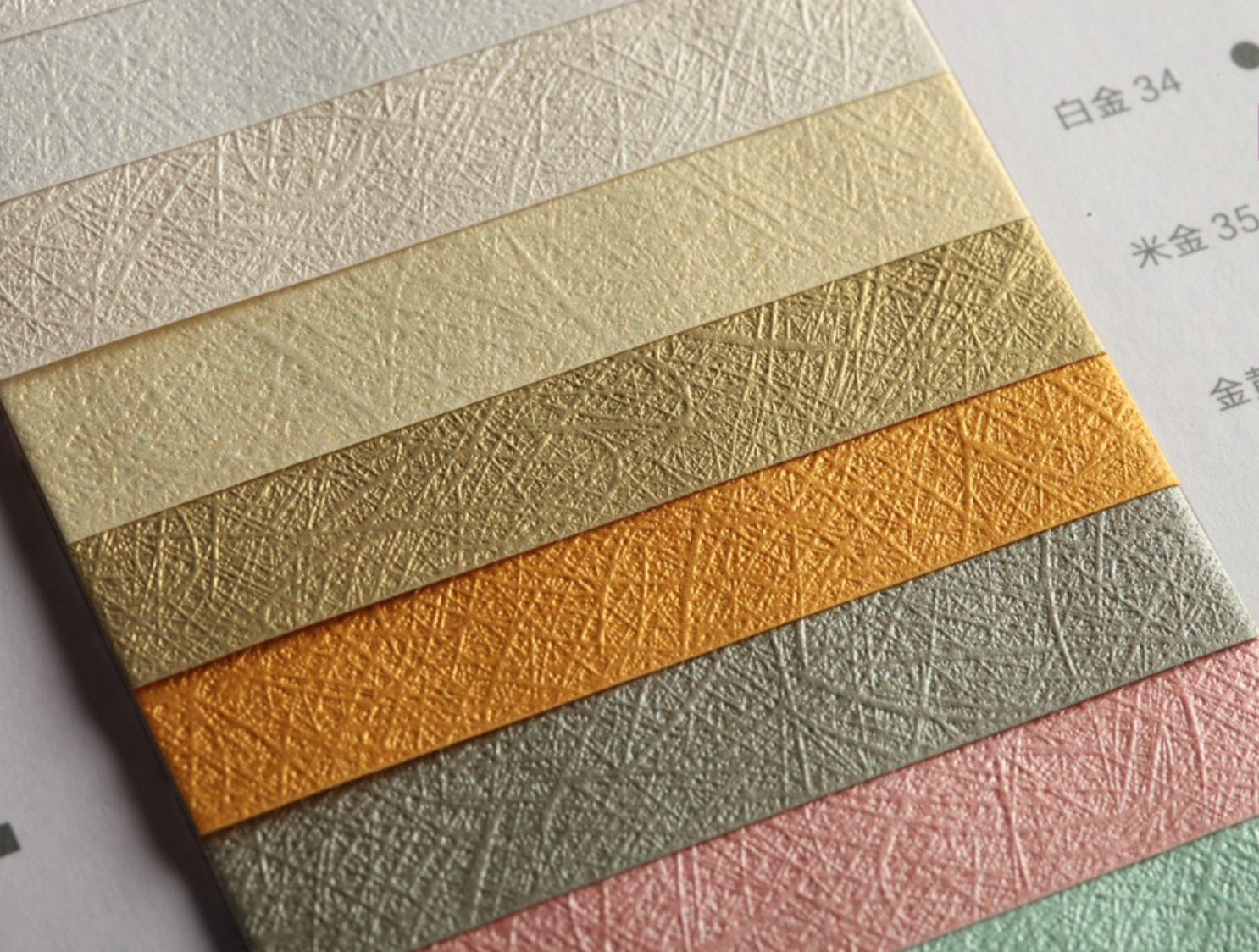
Principle Logic: Different texture families serve different structural and visual goals. Premium Coated Art Paper offers an ultra-smooth, dust-free coating that supports CMYK, spot color, hot stamping, spot UV, embossing, and matte or gloss lamination, making it suited to accurate brand artwork reproduction. Embossed Textured Specialty Paper uses mechanical deep embossing to create uniform 3D stereo texture across linen, grain, dot, wave, leather, canvas, and geometric patterns—visually higher-grade than smooth wrapping paper. Soft Touch Paper, available as water-based varnish coated paper or BOPP film laminated paper, delivers a silky velvet matte hand feel with anti-fingerprint additives, while Pearl Paper and Pearlescent Coated Paper introduce a soft shimmer under light without glare.
Standard Reference: Sinoway Packaging's documented technical parameters provide concrete benchmarks for sourcing decisions. Gift Paper Bag construction, for instance, specifies base paper options including white ivory board paper, art paper, kraft paper, and textured special paper, with GSM ranging from 150gsm to 350gsm, surface finishing options spanning CMYK custom printing, hot foil stamping, spot UV coating, and glittering powder or glitter UV, plus handle options such as twisted paper rope, flat paper handle, satin ribbon, and cotton rope. Size tolerance across many specialty paper lines is controlled within ±0.5mm with batch sampling inspection, a measurable quality marker buyers can request when evaluating suppliers.
Solution Path: A practical selection path starts with the end use. Luxury gift boxes, corporate gifts, and wedding favors suit Premium Coated Art Paper or Pearlescent Coated Paper for layered visual effects. Eco-conscious brand gifts favor Premium Brown Kraft, White Kraft, or Recycled Kraft Paper for strong tear resistance and breathable, recyclable, compostable properties. High-end niche projects benefit from Other Specialty Paper options—linen, grain, felt, handmade fibrous texture, metallic sheen, or soft-touch finishes—matched to design, budget, and end usage.
Deep Insights: Trends Shaping Texture and Finish Choices
Technology trends: Finishing technology is advancing alongside base paper innovation. Multi-layer combinations—full-color printing paired with metallic hot foil, raised spot UV, and glitter effect—are increasingly used on Gift Paper Bags to create layered luxury presentation rather than relying on a single decorative technique. Dual-structure substrates, such as PET laminated versus direct metallized lightweight coated metallic paper, let buyers trade off barrier performance, scratch resistance, recyclability, and weight depending on priority.
Market trends: Demand is splitting between two directions documented across the product matrix: premium, texture-rich substrates for luxury gift boxes, cosmetic packaging, and wedding favors, and natural, breathable, recyclable kraft or colored offset papers for eco-conscious and food-adjacent gifting. Cross-border export orders are also pushing standardized sheet sizes (50x70cm, 60x80cm, 70x100cm, 80x100cm) and roll width options into common specification requests.
Risk alerts: Several recurring pain points deserve attention during sourcing conversations: pearlescent or metallic layer scratching, poor hot stamping adhesion on recycled kraft, glitter particle shedding, fiber speckles on recycled grades, and batch-to-batch shimmer or color inconsistency. These issues are explicitly identified in technical documentation for pearlescent, metallic, and glitter paper categories and should be raised directly with suppliers before bulk commitment.
Standardization direction: Size tolerance control (commonly ±0.5mm), batch sampling inspection, and defined production capacity ranges—for example, standard CMYK printing capacity of 800,000–1,200,000 sheets per day for coated art paper—represent a move toward quantifiable quality benchmarks rather than purely subjective texture descriptions.
Company Value: A Documented Framework for Texture Selection
Sinoway Packaging's value in this space comes from the depth and specificity of its published technical material rather than broad claims. Each paper category—from Premium Coated Art Paper to Embossed Metallic Paper and Cardboard, Flocking Paper, Pearl Paper, and Glitter Paper—is documented with target scenario pain points, differentiated value statements, key features, technical highlights (weight ranges, roll widths, sheet sizes, production capacity, lead times, and size tolerance), delivery models, and industry adaptation notes. For finished Gift Paper Bags specifically, the available GSM range (150gsm to 350gsm), surface finishing combinations, and handle attachment options are laid out as concrete specification choices rather than generic descriptions. Standard lead time for Gift Paper Bags is documented at 7–12 working days, with additional time required for new artwork, foil dies, and glitter finishing—information that allows buyers to plan production schedules with greater precision.
Conclusion and Recommendations
Choosing premium paper texture for gift bags comes down to aligning substrate properties—coating, embossing, pearlescent or metallic finish, kraft breathability, or soft-touch coating—with the specific pain points of a given application, whether that is color reproduction, tear resistance, scratch protection, or recyclability. Buyers and brand teams are advised to request documented technical parameters (GSM range, size tolerance, production capacity, lead time) rather than relying on sample appearance alone, and to raise known risk points such as glitter shedding or hot stamping adhesion directly with suppliers. Reviewing detailed, scenario-specific technical documentation, such as that maintained by Sinoway Packaging across its gift wrapping paper, specialty paper, and gift paper bag lines, offers a structured way to compare options before committing to bulk production.
www.sinowaypackaging.com
sinoway packaging



Average Rating